


Food in Oviedo: what to eat and how to order
If you are visiting Oviedo for the first time, it helps to understand a few terms commonly used in Asturian restaurants and bars. Ordering à la carte is not the same as choosing a menú del día, and a tapa is not necessarily the same as a ración.
À la carte, menú del día, tapas, raciones and dishes to share
À la carte
The à la carte menu lets you choose freely from the dishes offered by the restaurant: starters, fish, meat and desserts. Each dish has its own price and it usually offers a wider choice of specialities than the set lunch menu.
Menú del día
The menú del día is very common at lunchtime from Monday to Friday, although this varies by restaurant. For a fixed price, it usually offers a choice of first and second courses and may include bread, dessert or coffee and, depending on the establishment, a drink. It is a good way to try home-style Asturian cooking at a more modest price.
Tapas
A tapa is a small portion of food, intended to accompany a drink or to let you sample a dish in a small quantity. Its size, and whether it is complimentary or charged for, depend on the establishment.
Raciones
A ración is larger than a tapa and is normally intended for sharing. Chorizo cooked in cider, calamari, croquettes, cheeses, cured meats and octopus are common examples. Some establishments also offer a media ración, or half portion.
Dishes to share
In Asturias it is common to order several dishes for the whole table to share. A large cachopo, a cheese board, a platter of cured meats or several raciones make it possible to sample different flavours. It is worth asking about portion sizes before ordering, as servings are often generous.
Essential dishes of Asturian cuisine
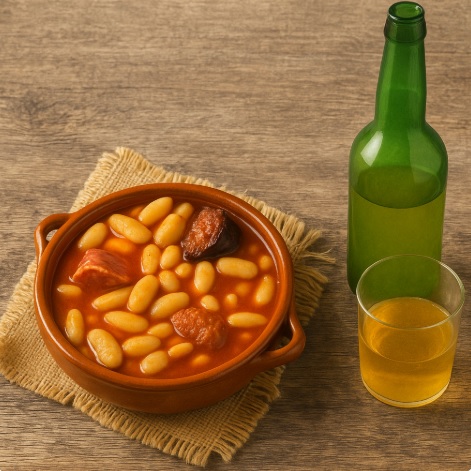
Asturian fabada
Asturian fabada
One of the great symbols of Asturian cuisine. It is made with fabes (large white beans) and compango, traditionally consisting of chorizo, black pudding and pork. It is a hearty dish, especially associated with the colder months, although it can be found throughout the year.
Fabes with clams
This dish combines the smooth texture of fabes with the maritime flavour of clams. More delicate than fabada, it brings together two characteristic elements of Asturian cooking: produce from the land and seafood from the coast.
Cachopo
Two large veal fillets, usually filled with ham and cheese, breaded and fried. There are many variations using different cheeses, cured meats, mushrooms and other fillings. Because of its size, cachopo is often ordered to share.
Hake in cider
Cider is also widely used in Asturian cooking. In this dish it accompanies hake, producing an aromatic sauce that may include onion, tomato or other ingredients depending on the house recipe.
Chorizo in cider
One of the most popular sharing dishes in cider houses and bars. The chorizos are cooked in natural cider and served sliced, usually with bread. It is a classic dish to share.
Asturian pote
A traditional stew made with leafy greens, potatoes, fabes and pork products. This hearty, flavoursome dish has rural origins and is closely associated with traditional Asturian home cooking.
Asturian-style tripe
Tripe has a long tradition in Oviedo. It is cut into small pieces and cooked in a rich, intensely flavoured sauce. It is commonly found in traditional restaurants and eating houses.
Fish and seafood from the Cantabrian Sea
The food served in Oviedo also reflects the influence of the Asturian coast. Hake, pixín (monkfish), bonito tuna when in season, and a variety of fish and shellfish are commonly found on restaurant menus.
Asturian beef
Besides cachopo, menus often feature veal escalopes, entrecôtes, sirloin steaks and other beef dishes. Some are served with sauces made from Asturian cheeses, particularly stronger varieties.
Cheeses asturianos
Asturias has an exceptional cheesemaking tradition. In Oviedo it is easy to find cheese boards that allow you to sample several varieties, ranging from mild cheeses to others with very intense flavours.
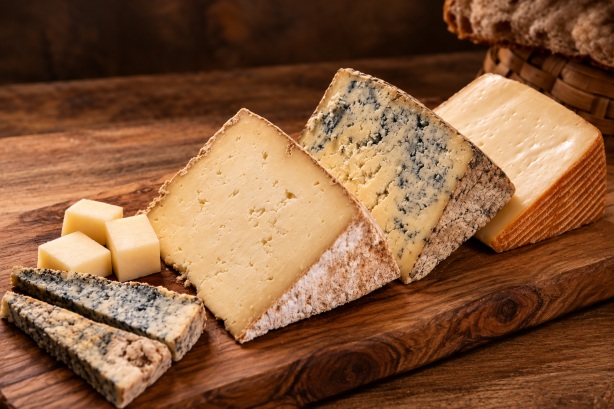
Selection of Asturian cheeses
Cabrales
An intensely flavoured blue cheese made in the Picos de Europa area.
Gamonéu
A distinctive cheese with varieties associated with Onís and Cangas de Onís.
Afuega'l Pitu
One of the most characteristic cheeses of central Asturias, produced in both white and red varieties.
Casín
A traditional, strongly flavoured cheese from central-eastern Asturias.
Los Beyos
A traditional cheese from the Los Beyos gorge area, usually made in small rounds.
Alongside these well-known cheeses, Asturias has many artisan dairies and local varieties. A cheese board is a good choice as a starter, a sharing dish or even at the end of a meal.
Desserts y dulces
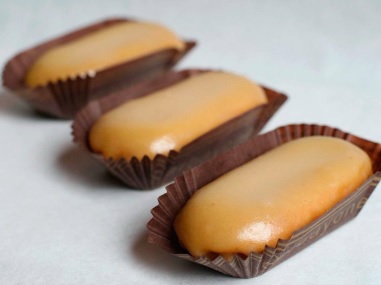
Oviedo carbayón pastry
Rice pudding
One of the most traditional desserts. In Asturias it is usually served creamy, often with a thin layer of caramelised sugar on top.
Casadielles
A traditional pastry generally filled with walnuts, sugar and anise. Depending on the recipe, it may be fried or baked.
Frixuelos
Thin pancakes made with flour, milk and egg, related to Galician filloas and French crêpes. They are usually served sprinkled with sugar and can also be filled.
Carbayones
The pastry most closely associated with Oviedo. It is made with a puff-pastry base and almond filling, finished with a glaze. Its name is also the popular nickname for people from Oviedo.
Cider: much more than a drink
Natural cider is an essential part of Asturian food culture. In cider houses it is traditionally served escanciada, poured from a height to aerate it. It is served in small amounts and should be drunk shortly after pouring.
As well as accompanying meals and sharing plates, cider is used as an ingredient in many recipes, including chorizo in cider and various fish dishes.
Eating in Oviedo
The city offers many different ways to enjoy this cuisine, from a menú del día or a few tapas to a full traditional meal or contemporary cooking based on Asturian produce. Many restaurants and cider houses are concentrated in the city centre, although establishments can be found throughout Oviedo.
See our guide to where to eat in Oviedo to discover the main dining areas and find restaurants, cider houses and other options.