


Asturian fabada: traditional recipe step by step
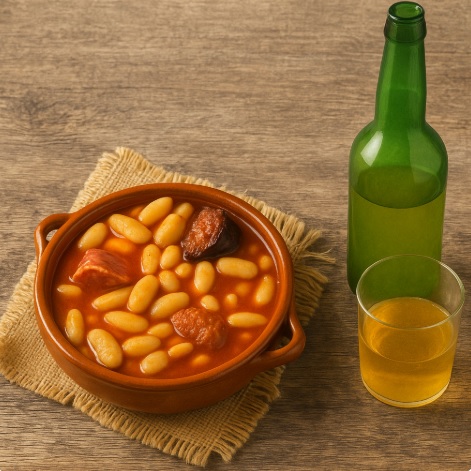
Asturian fabada
Ingredients for 4 people
- 500 g of faba de la Granja beans, traditionally also known as faba del cura.
- 2 cured Asturian blood sausages (morcillas).
- 2 cured Asturian chorizos.
- 200 g of lacón (cured pork shoulder).
- 50 g of streaky cured pork fat.
- 2 or 3 saffron threads.
- Water.
- Salt.
How to make Asturian fabada step by step
1. Soak the beans and part of the compango
Soak the faba de la Granja beans —traditionally also called faba del cura— in water for about 12 hours. It is also advisable to soak the lacón and streaky cured pork fat.
2. Start cooking in cold water
Place the beans in a pot, cover them with cold water and put them over the heat. Bring to the boil.
3. Skim the broth
As the liquid begins to boil, foam and impurities will rise to the surface. Remove them carefully with a skimmer or ladle until the broth is clear.
4. “Shock” the beans with cold water
Add approximately 1/4 glass of very cold water to briefly stop the boil. This traditional technique is known in Asturias as “asustar” the beans and helps them keep their skins during cooking. Repeat two or three more times, then continue cooking over low heat.
5. Add the saffron
Put the saffron threads in a mortar, add a little cooking broth and dissolve them. Add the mixture to the pot so the saffron is distributed throughout the broth.
6. Add the lacón
Add the lacón and continue cooking.
7. Add the chorizos and morcillas
About five minutes later, add the chorizos and morcillas, placing them on top of the beans. If more foam appears, skim it off again.
8. Cook slowly for 2 to 3 hours
Cover the pot and cook the beans with the compango over low, steady heat for about two to three hours. Check the liquid level occasionally. As it reduces, add small amounts of cold water to interrupt the boil and help prevent the beans from breaking. They should remain covered with liquid.
9. Do not stir the beans with a spoon
During cooking, do not stir the fabada with a spoon or any other utensil, as the beans may break. To mix the ingredients, simply hold the pot and gently rock it back and forth.
10. Check the beans and season
When the beans are soft, tender and still whole, taste the broth. Add salt only if necessary, as the compango often provides enough salt on its own.
11. Rest and serve
Remove the pot from the heat and leave the fabada to rest for about 30 minutes. You can serve the beans and compango separately or together, placing the compango over the beans.
Tips for keeping the beans whole
Use faba de la Granja. This recipe should be made with faba de la Granja, traditionally also called faba del cura, soaked for about 12 hours.
“Shock” the beans with cold water. At the beginning of cooking, interrupt the boil with about 1/4 glass of very cold water and repeat two or three times. If more liquid is needed later, use cold water as well.
Do not use a spoon to stir. Gently rock the pot back and forth instead. This mixes the ingredients without damaging the beans.
Keep the cooking slow. Once the compango has been added, let the fabada cook gently and make sure the beans remain covered by broth.
Taste before adding salt. The compango already seasons the stew and may provide enough salt. Add more only after tasting once the beans are tender.
Fabada in Asturian cuisine
Fabada is a classic of traditional Asturian cuisine and one of the dishes most often sought out by visitors to Oviedo who want to discover the region’s food. Although it is especially associated with the colder months because it is a hearty dish, it can be found throughout the year in restaurants, cider houses and traditional eateries.
To discover other dishes, cheeses, desserts and food traditions from Asturias, see our guide to the food of Oviedo and Asturias.