


Asturian casadielles: traditional recipe step by step
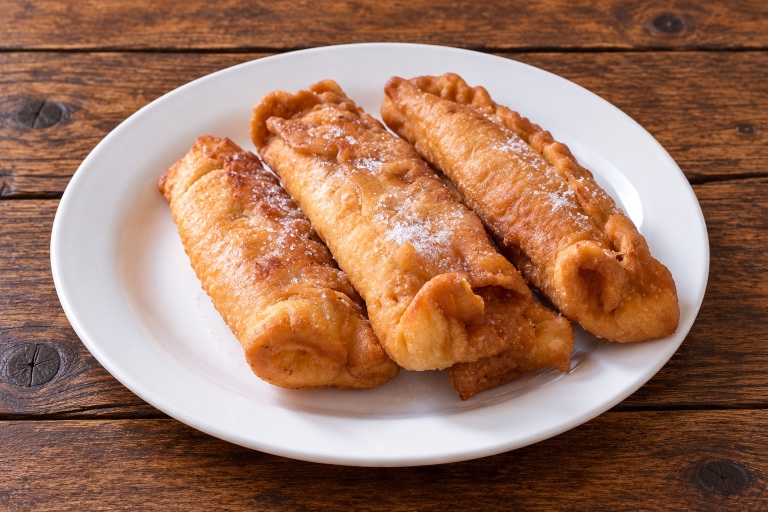
Asturian casadielles
Ingredients for about 12 casadielles
For the dough
- 250 g plain flour.
- 75 ml white wine.
- 50 ml mild olive oil.
- 25 g butter melted.
- 1 egg yolk.
- A pinch of salt.
For the filling
- 200 g shelled walnuts.
- 100 g sugar.
- 2 tablespoons sweet anise liqueur.
- About 2 tablespoons water.
For frying and finishing
- Enough mild-flavoured oil for frying.
- Sugar for dusting.
How to make Asturian casadielles step by step
1. Make the dough
Place the white wine, oil, melted butter, egg yolk and a pinch of salt in a bowl. Mix well, then gradually add the flour until a smooth dough forms.
2. Knead and leave to rest
Knead the dough for a few minutes until it is smooth, flexible and easy to handle. Shape it into a ball, cover with a cloth or cling film and leave to rest for about 30 minutes.
3. Make the walnut filling
Chop the walnuts, taking care not to reduce them completely to a powder. Mix them with the sugar, anise liqueur and water. The filling should be moist and cohesive, but not runny.
4. Roll and cut the dough
Divide the dough into several portions and roll each one out on a lightly floured surface. It should be very thin. Cut it into similarly sized rectangles.
5. Fill the casadielles
Place a small portion of walnut filling near one end of each rectangle. Roll the dough around the filling to form a small cylinder and press the ends firmly so they do not open while frying. You can use a fork to help seal them.
6. Fry
Heat plenty of oil over medium-high heat. Fry the casadielles in small batches, turning them if necessary, until golden and crisp. Avoid overheating the oil so the pastry cooks through properly.
7. Drain and dust with sugar
Remove the casadielles and leave them briefly on kitchen paper to drain. While they are still warm, dust them generously with sugar.
Tips for making good Asturian casadielles
Roll the dough thinly. Thin pastry gives the casadielles a lighter, crisper texture.
Do not grind the walnuts too finely. Keeping some texture makes the filling more enjoyable.
Control the moisture in the filling. It should hold together without being too wet, otherwise it may leak out during frying.
Seal the ends well. Pressing them with a fork helps seal the casadielles and prevents them from opening in the oil.
Watch the oil temperature. If it is too cool, the casadielles will absorb oil; if it is too hot, they will brown before the pastry is fully cooked.
Dust with sugar while still warm. It will stick better to the surface.
Casadielles in Asturian cuisine
Casadielles are one of Asturias’ most traditional pastries. They consist of a thin pastry filled mainly with walnuts and sugar, usually flavoured with anise liqueur.
The fried version is one of the best known. Once golden, the casadielles are drained and finished with a dusting of sugar. There are many family recipes, with small variations in both the pastry and the proportions used for the filling.
They are especially associated with celebrations and festive occasions, although today they can be found in pastry shops and made in Asturian homes throughout the year.
To discover more dishes, cheeses, desserts and culinary traditions from Asturias, see our guide to the gastronomy of Oviedo and Asturias.