


Asturian beans with clams: traditional recipe step by step
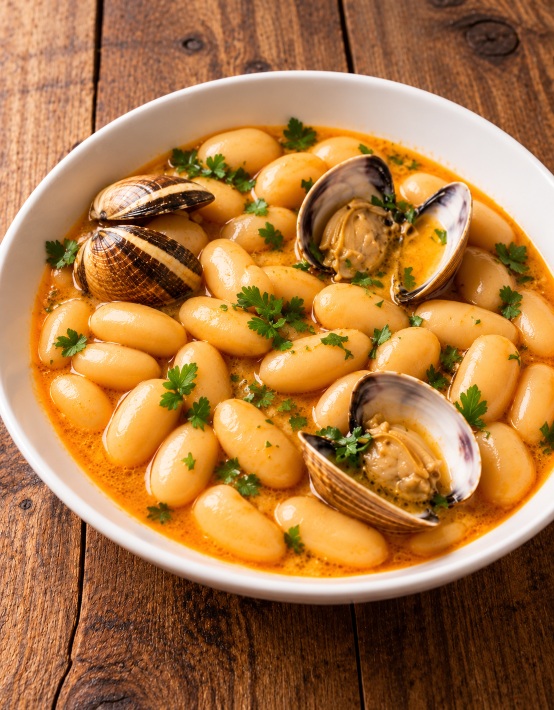
Asturian beans with clams
Ingredients for 4 people
- 500 g Asturian faba beans (faba de la Granja).
- 500 g clams.
- 1 onion.
- 2 garlic cloves.
- 100 ml white wine.
- 1 bay leaf.
- Fresh parsley.
- Extra virgin olive oil.
- Water.
- Salt.
How to make Asturian beans with clams step by step
1. Soak the beans
Place the Asturian faba beans in a large bowl, cover them with plenty of cold water and leave them to soak for about 12 hours, preferably overnight.
2. Clean the clams
Place the clams in a bowl of cold salted water so they can release any sand. Leave them for about an hour, then rinse them several times with clean water. Discard any broken clams or any that remain open and do not close when touched.
3. Start cooking the beans
Drain the soaking water and place the beans in a pot. Cover them with cold water, add half an onion and a bay leaf, and place over the heat.
4. Skim and cook slowly
When they begin to boil, remove the foam and impurities that rise to the surface with a slotted spoon. Lower the heat and cook the beans slowly. If they need more liquid, add small amounts of cold water so they remain covered.
5. Do not stir with a spoon
While cooking, avoid stirring the beans with a spoon so they do not break. Instead, hold the pot by the handles and gently rock it back and forth. Continue cooking until the beans are tender.
6. Prepare the sautéed base
Finely chop the garlic cloves and the remaining half onion. Heat a little extra virgin olive oil in a frying pan and gently sauté them until soft, taking care not to burn the garlic.
7. Open the clams with white wine
Add the drained clams to the pan, pour in the white wine and cover. Cook for just a few minutes, until the clams open. Remove them from the heat as soon as they open to prevent overcooking.
8. Add the clams to the beans
Discard any clams that remain closed. Strain the juices they have released to remove any traces of sand and add the liquid to the pot. Add the clams as well and combine everything by gently rocking the pot.
9. Cook everything together
Let the beans and clams cook together for about 5 minutes over low heat, allowing the flavours to blend without making the clams tough. Add freshly chopped parsley.
10. Check the seasoning and leave to rest
Taste the broth and add salt only if needed. Remove the pot from the heat and let the beans rest for about 10 to 15 minutes before serving.
Tips for perfect Asturian beans with clams
Use Asturian faba beans. Their creamy texture and thin skin make them particularly suitable for this dish. Soaking them beforehand helps them cook evenly.
Clean the clams thoroughly. It is important to remove all the sand before adding them to the dish. The liquid released as they open should be strained before being added to the beans.
Cook the beans slowly. Keep them at a gentle simmer and avoid using spoons or other utensils to stir them. Gently rocking the pot helps keep the beans whole.
Do not overcook the clams. They should be opened just before being added to the dish and remain with the beans for only a few minutes. Overcooking can make them lose their tender texture.
Adjust the salt at the end. The clams and their juices add flavour and natural saltiness, so taste the dish after adding them before seasoning further.
Beans with clams in Asturian cuisine
Fabes con almejas combine one of the most representative products of Asturian agriculture with an ingredient from the Cantabrian Sea. Compared with the richness of fabada, this is a lighter dish in which the beans absorb the flavour of the shellfish and their broth.
It is a common dish in restaurants and traditional eateries throughout Asturias and one of the best-known ways of preparing fabes apart from traditional fabada.
To discover other dishes, cheeses, desserts and culinary traditions from Asturias, see our guide to the food of Oviedo and Asturias.