


Historic Building of the University of Oviedo
The Historic Building of the University of Oviedo, located on Calle San Francisco, is the founding centre of Asturias' historic university. Officially opened in 1608, it preserves more than four centuries of academic history and forms an essential part of Oviedo's architectural heritage.
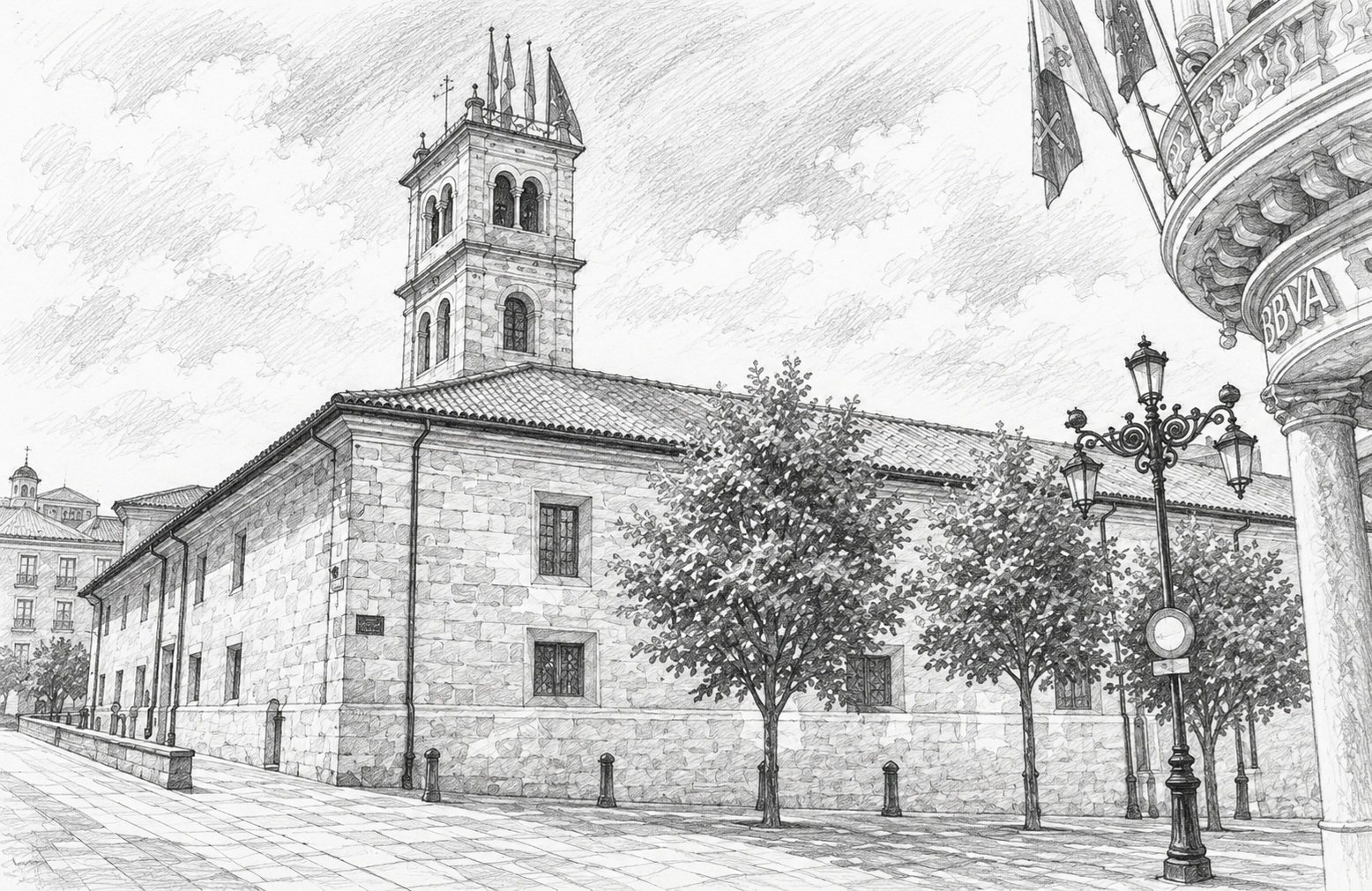
Historic Building of the University of Oviedo
The University founded by Fernando Valdés Salas
The origins of the University of Oviedo are closely linked to Fernando Valdés Salas, Archbishop of Seville and President of the Council of Castile. In his will, he allocated part of his estate to the creation of a university in Asturias, although the institution did not begin its academic activity until several decades after his death in 1568.
The project for the building was drawn up in 1574 by Rodrigo Gil de Hontañón, one of the leading Spanish architects of the Renaissance. Construction was later entrusted to Juan del Ribero Rada and was affected by various difficulties and delays.
The opening of the University in 1608
The University of Oviedo officially opened its doors on 21 September 1608, the feast day of Saint Matthew. The first courses taught in the building included Arts, Canon Law, Civil Law and Theology.
From then on, the building on Calle San Francisco became the centre of university life in Oviedo for centuries. Although the University later expanded into new buildings and campuses, this historic building remains the principal symbol of its origins.
Austere Classical Renaissance architecture
The building has an approximately square plan, with four wings arranged around a central courtyard. Its exterior is deliberately restrained, dominated by stone walls, relatively small openings and decoration concentrated in specific architectural elements.
The main façade is distinguished by its entrance, framed by Tuscan columns and crowned by the coats of arms of Fernando Valdés. A frieze with triglyphs and other decorative elements runs around the building, while family coats of arms also appear on its corners.
The university courtyard
Beyond the main entrance lies the courtyard, one of the building's most characteristic spaces. It is arranged on two levels: the lower storey uses Tuscan columns, while the upper level employs the Ionic order and is now enclosed with glazing.
At its centre stands a statue of Fernando Valdés Salas, created by Oviedo sculptor Cipriano Folgueras and installed in 1908 to mark the University's third centenary.
The Clock Tower
The appearance of the building changed during the 19th century with the construction of its characteristic tower. Built by Luis Céspedes in 1859, it served several purposes, including those of bell tower and astronomical observatory.
The tower and its clock are now among the most recognisable features of the Historic Building when viewed from Calle San Francisco.
The destruction of the library in 1934
The Historic Building suffered extremely serious damage during the October Revolution of 1934. A fire destroyed the university library and its collections, resulting in one of the greatest losses of bibliographical and cultural heritage in the history of the institution.
The library had been built in the 18th century to a design by Manuel Reguera. Following the destruction of 1934 and further damage during the Spanish Civil War, the complex was rebuilt, preserving its historic configuration as far as possible.
The Historic Building today
For centuries, the building accommodated much of the teaching activity of the University of Oviedo. The creation and expansion of new campuses gradually allowed academic departments and courses to move to other areas of the city.
Today, the Historic Building continues to perform institutional and cultural functions for the University. Its courtyard, assembly hall, library and other rooms host academic ceremonies, exhibitions and cultural activities, maintaining its status as one of the University's and Oviedo's most emblematic historic buildings.
Location and visit
Address: Calle San Francisco, 1 · 33003 Oviedo.
Location: in the heart of central Oviedo, close to Plaza de la Escandalera and just a short walk from the historic old town.
Visit: the historic courtyard is one of the most accessible and recognisable areas of the complex. Access to other parts of the building may depend on university activities, academic events and temporary exhibitions.