


Chapel of the Chaste King at Oviedo Cathedral
The Chapel of Our Lady of the Chaste King, located on the north side of the Cathedral of San Salvador of Oviedo, occupies an exceptional place in the history of the Asturian monarchy. On this same site, at the beginning of the 9th century, King Alfonso II the Chaste ordered the construction of a church dedicated to Saint Mary, also conceived as the burial place of the Asturian monarchs.
Aquella basílica prerrománica formaba parte del gran conjunto religioso promovido por Alfonso II en la capital del reino, junto a la iglesia del Salvador, la Holy Chamber y San Tirso. A sus pies se dispuso el Royal Pantheon, considerado el primer panteón de una monarquía hispana y antecedente de otros espacios funerarios regios medievales.
Chapel of Our Lady of the Chaste King, Oviedo Cathedral
From the Pre-Romanesque basilica to the Baroque chapel
By the end of the 17th century, the old Church of Saint Mary was in a very poor state of repair. Bishop Fray Tomás Reluz promoted its replacement with a new church, with support from the Crown. Work began in 1705 under the direction of Bernabé de Hazas and was completed in the early years of the 18th century, after difficulties caused by the collapse of the dome structure during construction.
The present chapel reflects the Baroque style and has a three-aisled plan, with narrower side aisles, robust pillars, a transept and a monumental dome set on a drum. Its decoration combines vegetal and heraldic motifs, emphasizing both the Marian dedication and the royal character of the space.
The pendentives and the area around the dome feature idealized representations of monarchs associated with the former Kingdom of Asturias, while the royal coats of arms recall the monarchy’s patronage of the building’s reconstruction.

Dome of the Chapel of the Chaste King
The Royal Pantheon
El elemento de mayor significado histórico de la capilla es su Royal Pantheon. El primitivo espacio funerario creado por Alfonso II acogió los sepulcros de miembros de la monarquía asturiana y convirtió Oviedo en uno de los primeros grandes centros de memoria dinástica de la Península Ibérica medieval.
During the Baroque reconstruction, the pantheon was moved to the north aisle. It is protected by an iron grille crowned with royal heraldry and contains six sarcophagi holding remains attributed to various kings, queens, princes and members of the Astur-Leonese royal family.
Among the most remarkable pieces is the Early Christian sarcophagus of Itacius, dating from the 5th century and reused centuries later in the royal funerary setting. Its presence makes it one of the oldest surviving material remains in this complex.

Royal Pantheon of Oviedo Cathedral
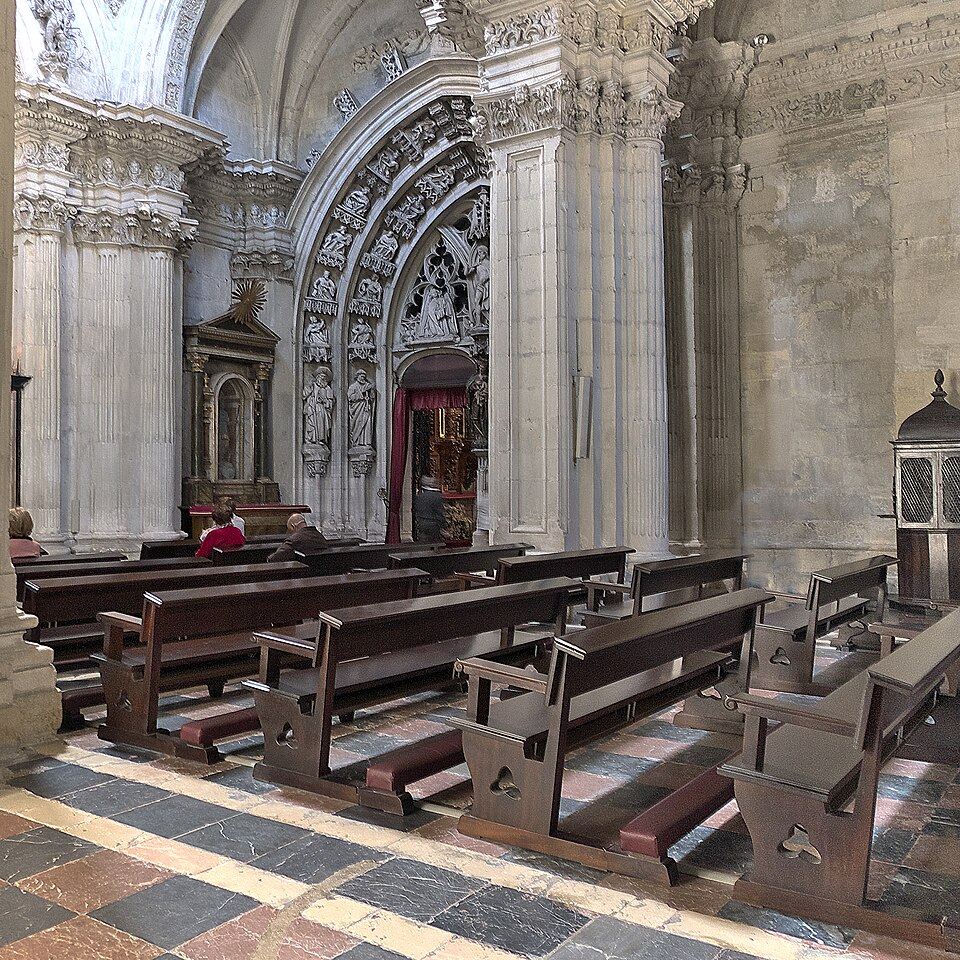
The Late Gothic portal
One of the most valuable elements preserved from earlier periods is the great Late Gothic portal connecting the chapel with the cathedral’s north transept. It was created in the 15th century, in the context of works directed by masters from northern Europe such as Nicolás de Bar and Nicolás de Bruselas, and is one of the finest examples of Flemish influence on Gothic art in Oviedo.
The sculptural programme brings together apostles, evangelists, prophets and figures from the Old Testament. At the centre is the Risen Christ, accompanied by angels bearing instruments of the Passion. The central mullion is occupied by a Virgin of the Milk, added later and polychromed in the modern period.

Late Gothic portal connecting the Cathedral with the Chapel of the Chaste King
The main altarpiece and the Virgin of the Light
The presbytery is dominated by an important Baroque altarpiece by Antonio Borja, made between 1715 and 1719. Its design was among the earliest in Asturias to use estípites as decorative supports. The ensemble is dedicated to the Virgin and depicts Marian scenes, culminating in the upper section with the Assumption and Coronation of Mary.
Another part of the chapel houses the altarpiece of the Virgin of the Light, dated 1552. It comes from the former retrochoir of the cathedral’s main nave and was moved here after the choir was dismantled at the beginning of the 20th century. The central image of the Virgin of the Light is attributed to the Mannerist sculptor Manuel Álvarez.
Beside this altarpiece are also preserved the stone sculptures of Saint Peter and Saint Paul, likewise from the former retrochoir. The coexistence of Pre-Romanesque, Gothic, Renaissance and Baroque works makes this chapel one of the most historically and artistically rich spaces in Oviedo Cathedral.
The heads from the Calvary
Above the doorway at the western end of the chapel are three stone heads representing Christ, the Virgin Mary and Saint John. They date from the late 12th century and are stylistically related to the Calvary preserved in the Holy Chamber. They are a modest but valuable testimony to the medieval decoration of the former cathedral complex.