


Les Paxarines of San Mateo: a unique Oviedo tradition
Every 21 September, the main day of the San Mateo festivities in Oviedo, Cathedral Square hosts one of the city’s most distinctive traditions: the sale of les paxarines, small yellow handmade figures that form part of Oviedo’s popular heritage.
For generations they have been bought as small charms for the home. Popular tradition attributes to them protection from storms and good luck throughout the year, so many families keep the figure until the following San Mateo, when they replace it with a new one.
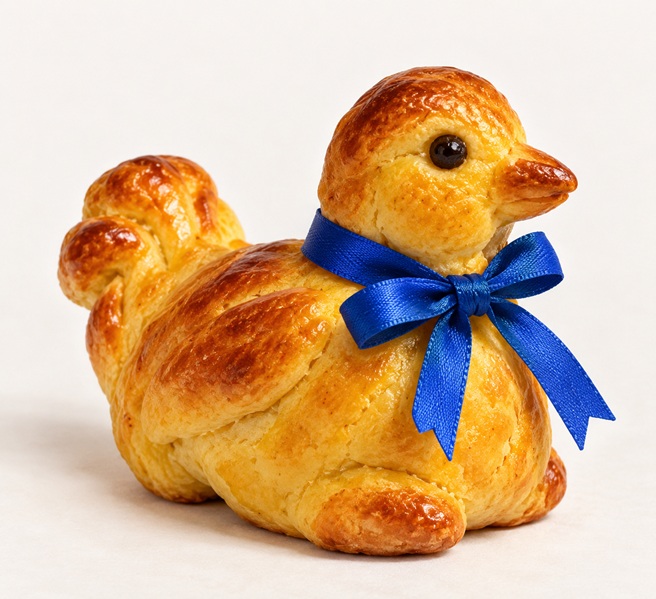
Traditional San Mateo paxarina.
Les paxarines are traditionally made from a flour- or bread-based dough, with saffron giving them their characteristic yellow colour. The dough is then shaped into small figures and baked. Among the best-known forms are human figures, animals, little baskets and nests.
A tradition linked to San Mateo
The exact origins of les paxarines are intertwined with oral tradition, but their connection with the San Mateo festivities and Oviedo Cathedral goes back several generations. Their distinctive character lies precisely in the fact that they are not an everyday product available throughout the year, but a custom tied to a particular date and place.
On 21 September, Cathedral Square and the surrounding area bring together local residents and visitors who come to take part in the day’s festive and religious events and, at the same time, buy these small figures.
For anyone visiting Oviedo during the festivities, seeing them on sale is an easy way to discover a more traditional side of San Mateo, away from the large concerts and mass events and connected with popular customs handed down from one generation to the next.
The Cartón family and the continuation of the tradition
The making of les paxarines is traditionally associated with the Cartón family, who have maintained this custom for several generations and have played a decisive role in ensuring that it remains part of the San Mateo festivities.
Their work preserves the handmade character of the pieces: each figure is shaped individually and retains the traditional forms that Oviedo residents recognise year after year. This family continuity is one of the reasons why les paxarines have a value that goes far beyond their appearance: they are a small expression of local folk heritage.
In a festival that has changed considerably over time, the presence of les paxarines is a reminder that San Mateo still preserves simple traditions deeply connected with the everyday history of Oviedo.
Where and when les paxarines are sold
Tradition calls for a visit on 21 September to Oviedo’s Cathedral Square, where les paxarines are put on sale to coincide with the main events of the San Mateo festivities.
For many Oviedo residents, buying a new paxarina every year is part of the day’s ritual. Once at home, the figure is kept as a souvenir of the festivities and as a symbol of a custom that remains alive in the 21st century.
If you are in Oviedo during San Mateo, it is well worth visiting the Cathedral in the morning. Besides seeing one of the city’s main monuments, you can discover a tradition that is difficult to encounter at any other time of year.
Related: see also our page about the San Mateo festivities in Oviedo and our information about the Día de América en Asturias.