


Palace of the Duke of Parque
The Palace of the Duke of Parque (Palacio del Duque del Parque), also known as the Palace of the Marqués de San Feliz or the Palace of El Fontán, is one of Oviedo's great Baroque aristocratic residences. Built in the 18th century, it stands in Plaza de Daoíz y Velarde, beside the historic El Fontán district.
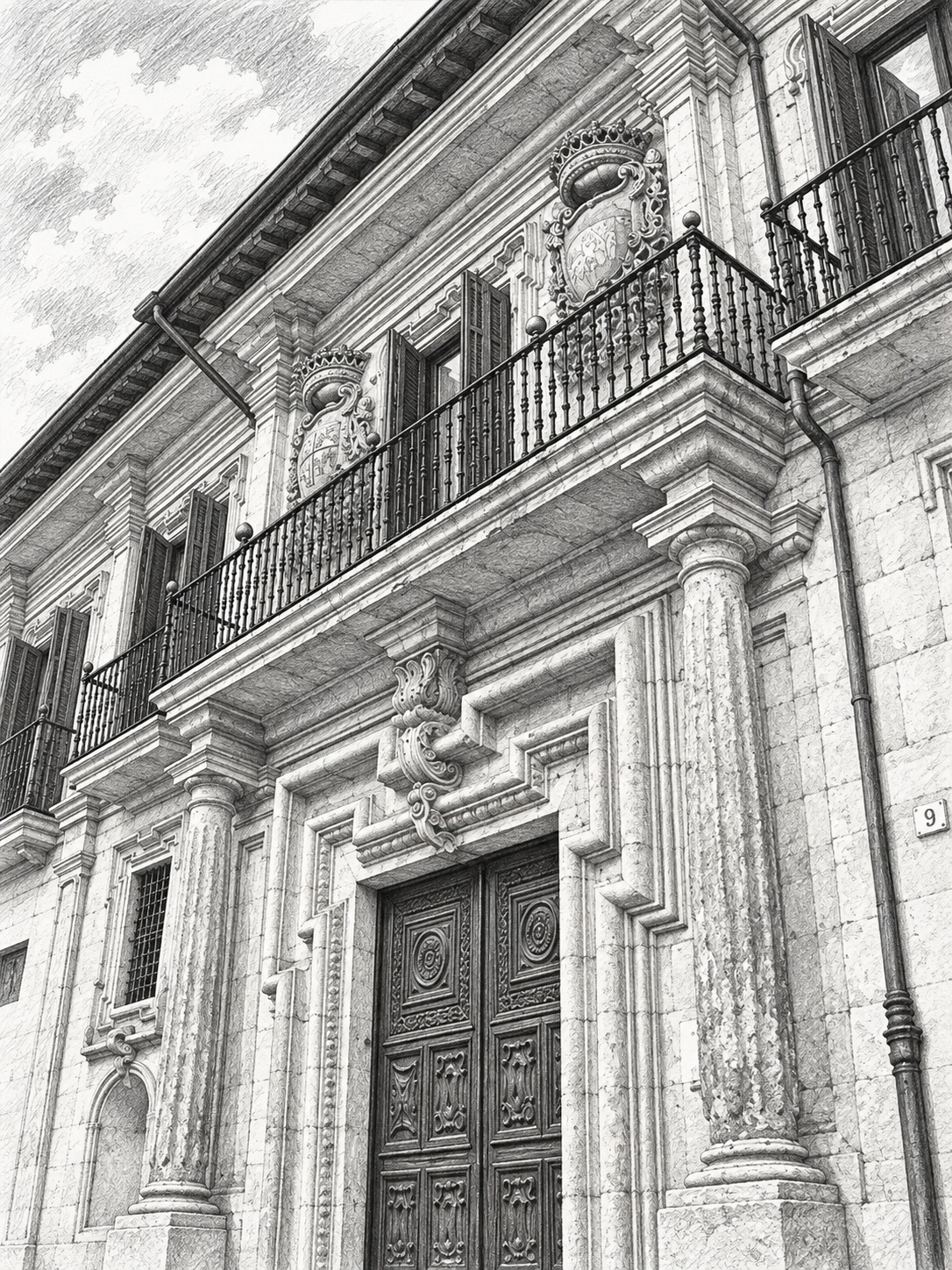
Palace of the Duke of Parque · Oviedo
The great Baroque palace of El Fontán
The Palace of the Duke of Parque, also known as the Palace of the Marqués de San Feliz or the Palace of El Fontán, is one of the great aristocratic residences built in Oviedo during the 18th century. It stands in Plaza de Daoíz y Velarde, beside El Fontán market and square.
In 1723, Isabel de Trelles y Valdés, daughter of the first Duke of Parque, and her husband acquired several plots of land in this area to build a large residence. The project was entrusted to Francisco de la Riva Ladrón de Guevara, one of the leading architects of the Asturian Baroque. Construction continued throughout the 1720s, and the palace was completed around 1730.
Architecture and façade
The building has an approximately square plan organised around an inner courtyard. Built in ashlar stone, it has an imposing horizontally developed façade designed to reflect the social status of its owners.
The main façade is arranged over three levels. The small openings on the lower floor retain something of the defensive appearance of earlier noble houses. Above them are windows and, on the main floor, larger and more prominent balconies. Much of the decoration is concentrated around the monumental entrance, which is flanked by columns, while noble coats of arms frame the principal balcony.
Courtyard, garden and stables
The palace rooms are arranged around a central courtyard, following a layout frequently used in large aristocratic residences of the period. The rear façade faces the private garden and has simpler decoration than the main façade.
The former stables stand beside the palace and were incorporated into the complex at a later date. Their architecture and decoration complete one of the most distinctive palace complexes in Oviedo's historic centre.
From aristocratic palace to arms factory
The history of the building extends beyond its original residential function. In 1794 it passed into the hands of Oviedo City Council and was used as a small-arms factory. This activity remained associated with the building until the mid-19th century, when the factory was moved to the former monastery of Santa María de la Vega.
The palace subsequently had several different uses. In 1892 it was acquired by the Marquises of San Feliz, which explains the other name by which the building is still known today.
A palace closely linked to El Fontán
When the palace was designed, this area outside Oviedo's old walled enclosure was becoming increasingly important. Nearby stood the Casa de Comedias, the Jesuit College of San Matías —today the Church of San Isidoro el Real— and other notable buildings.
With the subsequent development of El Fontán, the palace became part of one of Oviedo's most characteristic urban spaces. Its extensive façade is now one of the principal monumental backdrops of Plaza de Daoíz y Velarde.
Location and visit
Address: Plaza de Daoíz y Velarde, 9 · Oviedo.
Location: beside El Fontán market and just a short walk from Plaza de la Constitución and the Church of San Isidoro el Real.
Visiting: the palace is privately owned. Its monumental façade and exterior can be viewed freely from Plaza de Daoíz y Velarde.