


Parishes of the municipality of Oviedo
Oviedo is much more than its urban centre. The municipality covers 186.656 km², where the city coexists with villages, hamlets, scattered farmsteads, river plains and valleys that retain a distinctly rural character.
Administratively, the municipality is divided into 30 parishes, or collective population entities. This territorial division, deeply rooted in Asturias, reveals another side of Oviedo: Pre-Romanesque churches, former industrial settlements, traditional architecture, river landscapes and small villages just a few kilometres from the city centre.
The 30 parishes of Oviedo
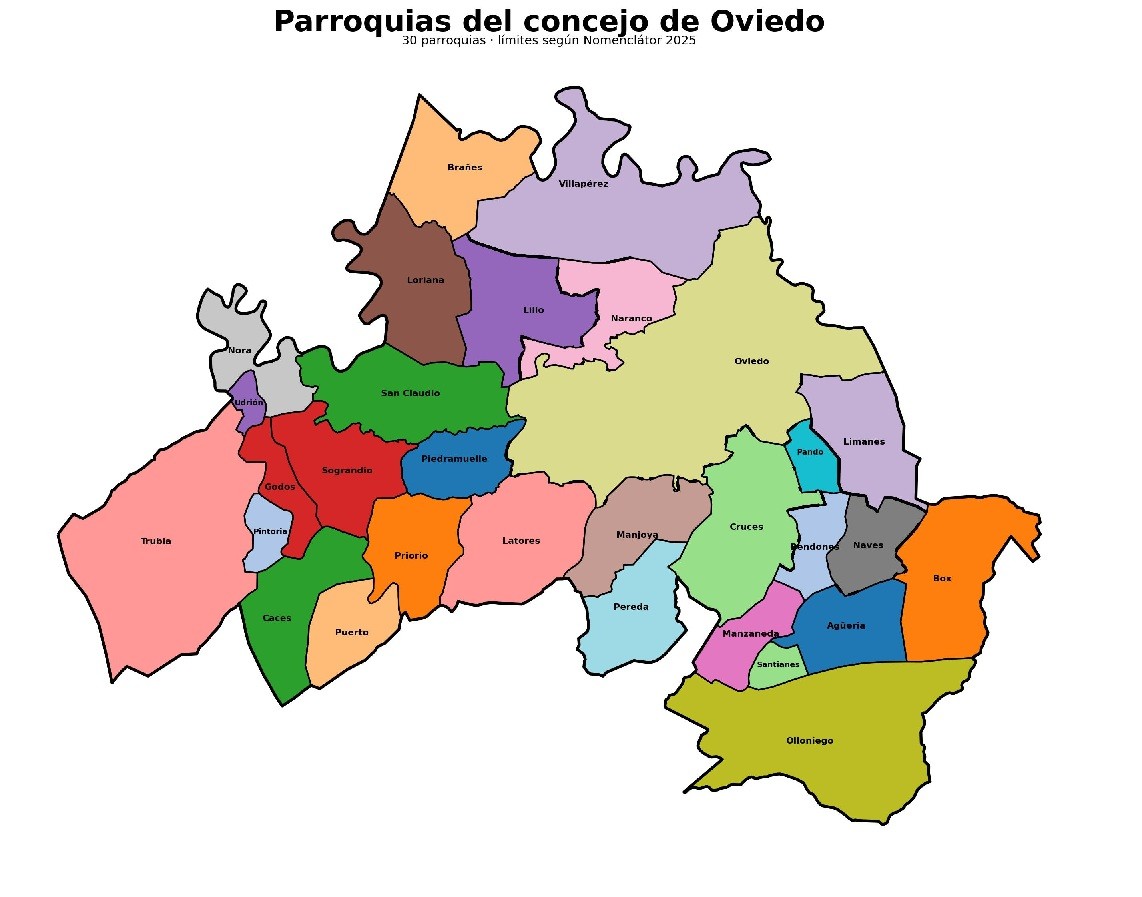
These are the parishes that make up the municipality, listed alphabetically:
Discover rural Oviedo
Several parishes combine monuments, traditions and landscapes that reveal a different side of Oviedo beyond the historic centre.
Bendones
Just a few kilometres from the city centre stands Santa María de Bendones, one of the churches of Asturian Pre-Romanesque architecture. Its rural setting and views towards the Aramo range make the area an appealing excursion from Oviedo.
Lillo and Mount Naranco
The slopes of Mount Naranco are home to some of Oviedo’s best-known monuments. San Miguel de Lillo forms part of the exceptional Pre-Romanesque ensemble of Naranco, very close to Santa María del Naranco.
Limanes and Faro
The parish of Limanes includes Faro, a village closely associated with a long-standing pottery tradition. Faro pottery is one of the municipality’s most distinctive traditional crafts.
Olloniego
Olloniego preserves an important historic ensemble associated with the old routes towards Spain’s central plateau. Its bridge, tower, palace and other heritage features recall the strategic importance once held by this settlement in the south of the municipality.
Priorio and Las Caldas
The area around Priorio and Las Caldas combines landscape, architecture and a spa tradition beside the River Nalón. It is one of the parts of the municipality where the transition between the urban area and the rural landscape is particularly evident.
San Claudio
San Claudio is closely linked to Oviedo’s industrial history, particularly to its former earthenware factory. Its heritage offers an insight into a side of the municipality quite different from the monumental character of the city centre.
Trubia
Located in the valley of the same name, Trubia has a strong industrial identity historically associated with the arms factory. Its landscape is also shaped by the Trubia and Nalón rivers and by the routes leading towards western Asturias.
Cruces
This parish is home to the El Bosque Zoological Centre, one of the family attractions located outside Oviedo’s urban centre.
Manzaneda and the rural landscape
Manzaneda and other small parishes in the municipality offer paths, scattered farmsteads, meadows and traditional architecture just a short distance from the city, revealing a lesser-known side of Oviedo.
Parishes, villages and neighbourhoods: they are not the same
In Asturias, a parish is a traditional territorial division that may include several villages, hamlets, localities and scattered farmsteads. For this reason, the name of a parish does not always correspond to a single settlement.
In Oviedo, the territorial pattern is particularly varied: some parishes form part of the continuous urban area or its immediate surroundings, while others contain numerous small settlements scattered across valleys and hillsides.